


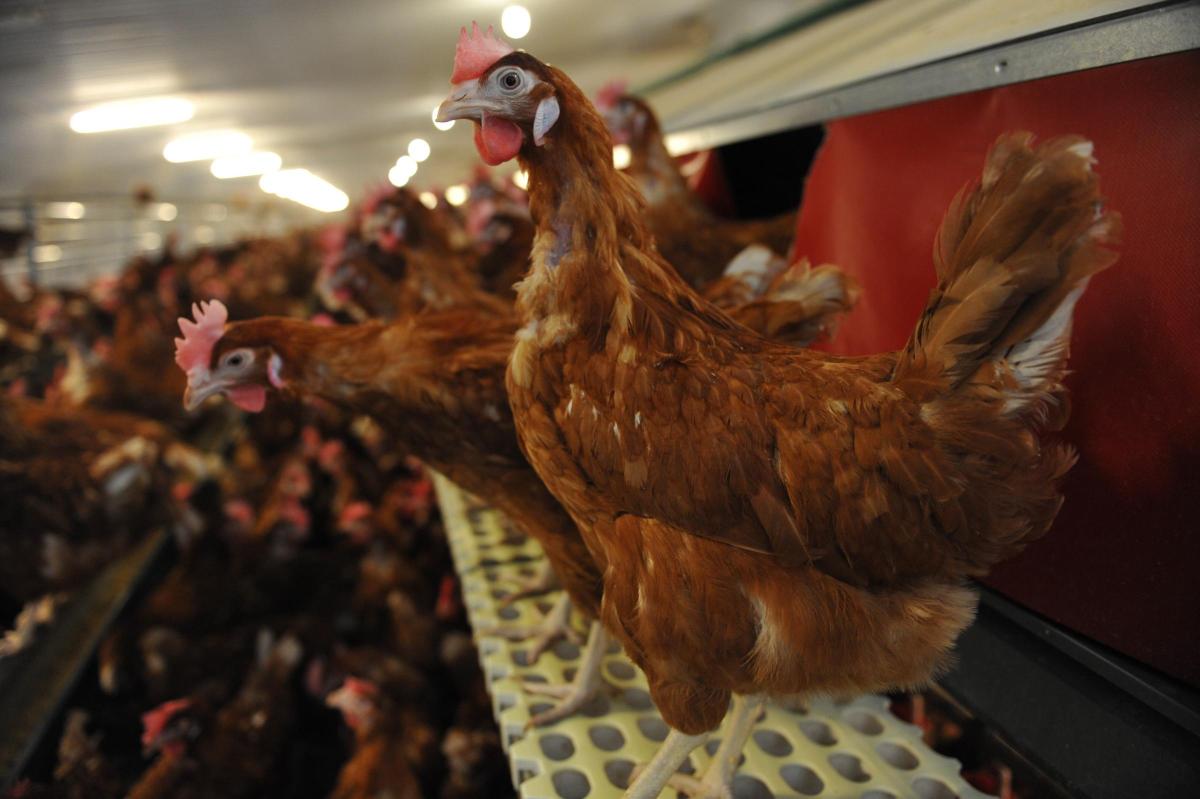
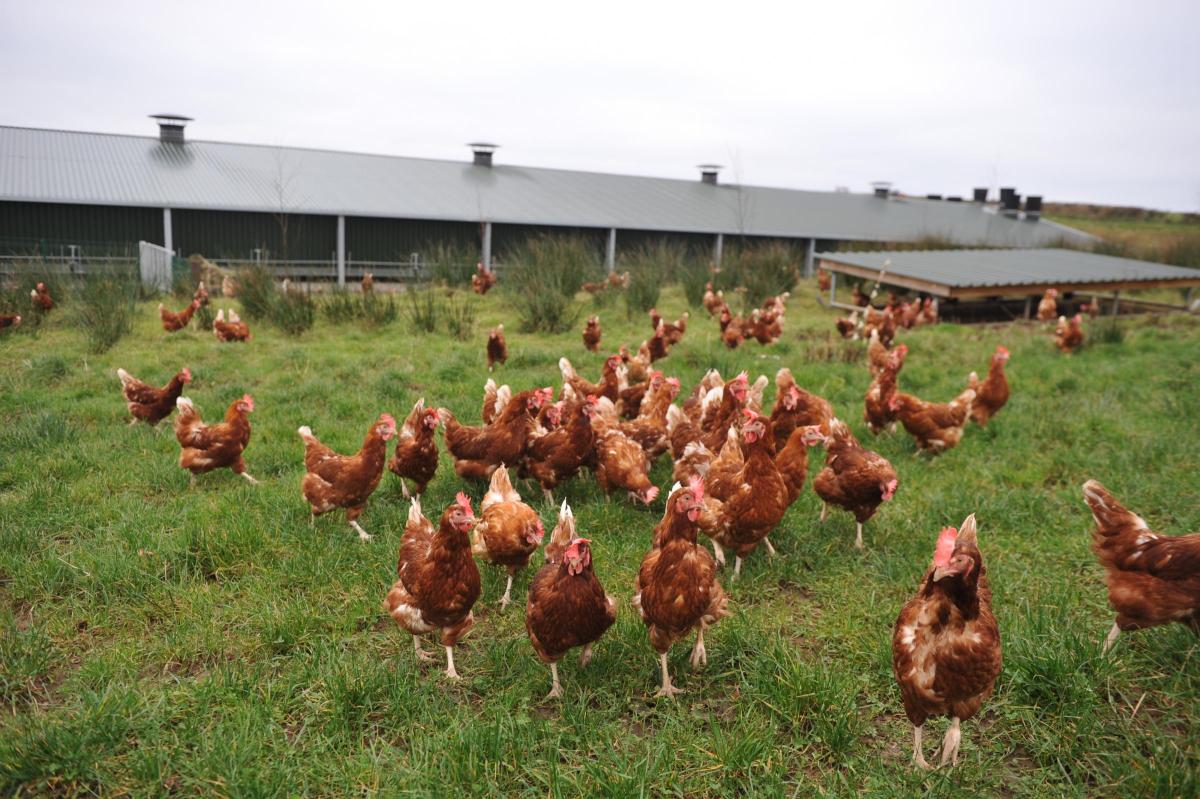

An overhaul of welfare standards for laying hens will see big changes introduced with a raft of new and revised requirements published earlier this year which will affect Pembrokeshire farmers who market their eggs with the RSPCA Assured logo.
From providing daylight in all sheds to increasing natural cover and the distribution of shelters on ranges, the changes could be far-reaching for some.
The RSPCA says the 2025 regulation updates, shared in Pembrokeshire Farmer earlier this year, were needed to ensure standards align with the latest scientific research, veterinary knowledge and practical developments, to allow ‘good practice’ in farm animal care.
About 70% of the UK’s 26m-bird free-range flock is currently RSPCA Assured, including the hens at Fenton Home Farm, near Haverfordwest, where free-range egg producers Stephen and Clare Morgan produce eggs from 64,000 hens.
They welcome improvements to bird welfare, but say that these must be based on good scientific evidence.
The Morgans say farmers need to be in control of light levels in sheds to prevent injurious feather pecking, and forcing poultry businesses to provide minimum levels of daylight is detrimental to hen welfare.
- Don't miss our next edition of Pembrokeshire Farmer, available free inside the Western Telegraph on November 26
When they experienced an isolated issue with feather-pecking in one of their flocks, the only way they could manage it was by suppressing light in the housing.
“We tried everything, but the only way we could deal with it and calm the birds down was to make their environment darker,” Stephen explains.
The Morgans, who supply their eggs to Kent-based Fridays, estimate the new standards will add 4p to the price of a dozen eggs.
They point out that eggs imported from Europe will not have to comply with the new standards, putting British egg producers at an immediate cost disadvantage.
Another of the standards they disagree with RSPCA Assured about is the tree cover requirement.
“Trees will encourage wild birds to roost and rest, and that increases the avian influenza risk to our hens,” says Clare.
“We don’t want wild birds anywhere near our hens.”
At 26 pages, the document that lists the new regulations is comprehensive and includes both fresh requirements and revisions of existing standards.
Enforcement will be overseen during annual inspections, but members can also be subject to any number of unannounced visits.
Key changes now in force include those around the provision of natural daylight.
Of all the standards, the requirement for natural daylight in all sheds has arguably caused the greatest concern among egg producers.
Barn houses built after 1 October 2025 must provide 3% natural daylight through windows while a deadline of 1 May 2032 has been set for existing houses.
Free-range producers have the option of making this adjustment during a refurbishment cycle, or by 1 January 2035, whichever is earlier.
They can however apply for a five-year derogation if this requirement “cannot be reasonably and realistically achieved”.
While the RSPCA and RSPCA Assured have no up-to-date financial analysis on cost, they have quoted figures of between £1-£1.50 a bird for fulfilling the natural daylight requirement.
Permitting farmers to adapt housing during refurbishment cycles will reduce that cost, reckons Kelly Grellier, chief commercial officer at RSPCA Assured.
This is because workers will already be on site, making it “much more cost efficient”, she says.
Managing light levels in housing is a key approach used by many producers to reduce incidence of aggressive pecking and the industry has expressed concern that the daylight requirement will diminish bird welfare, which the RSPCA disputes.
It says that one of the standards directs that it must be possible to readily control the amount of natural daylight entering a building to the extent that darkness can be achieved.
If veterinary advice is to reduce light to control aggressive feather pecking, the new standards have taken that into consideration, it adds.
Barriers that prevent birds gaining access to the underneath of multi-tier systems are now prohibited, except for the first seven days after birds have been placed in houses or when flocks are depopulated.
At least 5% of the entire range must have trees, shrubs or canopy-forming plants that give natural cover.
By 1 May 2027, this will need to increase threefold, to at least 20% of the total range area.


Share