



A life changing medical diagnosis which forced a Powys farming business to reassess its livestock enterprises has seen it establish a turkey diversification that generates an additional income and capitalises on existing infrastructure.
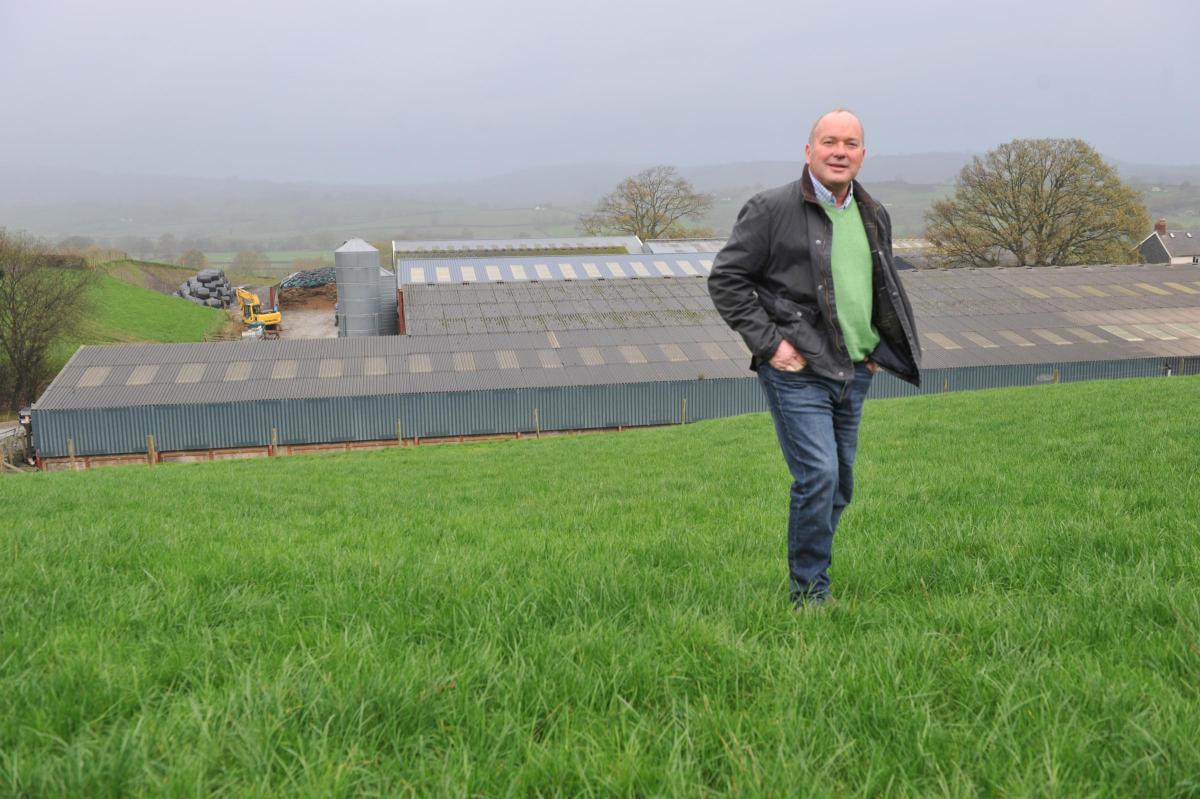
The Williams family have farmed at Red House Farm, near Trefeglwys, Caersws for three generations. Russell farms there now with his wife Fran, and 24-year-old son Harvey, producing beef from a 130 cow-suckler herd and lamb from 3,000 breeding ewes.
In 2022 and aged just 58, Russell was diagnosed with stage 4 Non-Hodgkin Lymphoma. Although the treatment was successful, it has taken its toll on his physical health and his ability to do the more demanding work associated with cattle and sheep.
“Harvey stepped up to the mark big time and between Fran, Harvey and family and friends we got through the first lambing,’’ Russell explains.
“But by the second lambing we could see that things had to change because of my health restrictions and it wasn’t sustainable for Harvey to continue doing all the heavy work.’’
Russell’s philosophy is that it is better to look for solutions than to worry about a problem.
The catalyst for change was a visit to friends in Pembrokeshire which involved a conversation about poultry and the outsourcing model local producer and processor, Capestone Organic Poultry Ltd, has in place.
Russell had an historic link to poultry production as previous generations had produced poultry all year round at Red House Farm.
Despite a 30-year hiatus, Russell knew he liked working with birds so he contacted Capestone to discuss how the farm might work with the business.
A visit to the farm by representatives of the company followed and it was quickly established that it met two of the major criteria: suitable housing and good access.
“For us it stacked up financially because for turkeys you don’t need to construct a new shed, you can adapt an existing one which has other uses during the rest of the year,’’ says Fran.
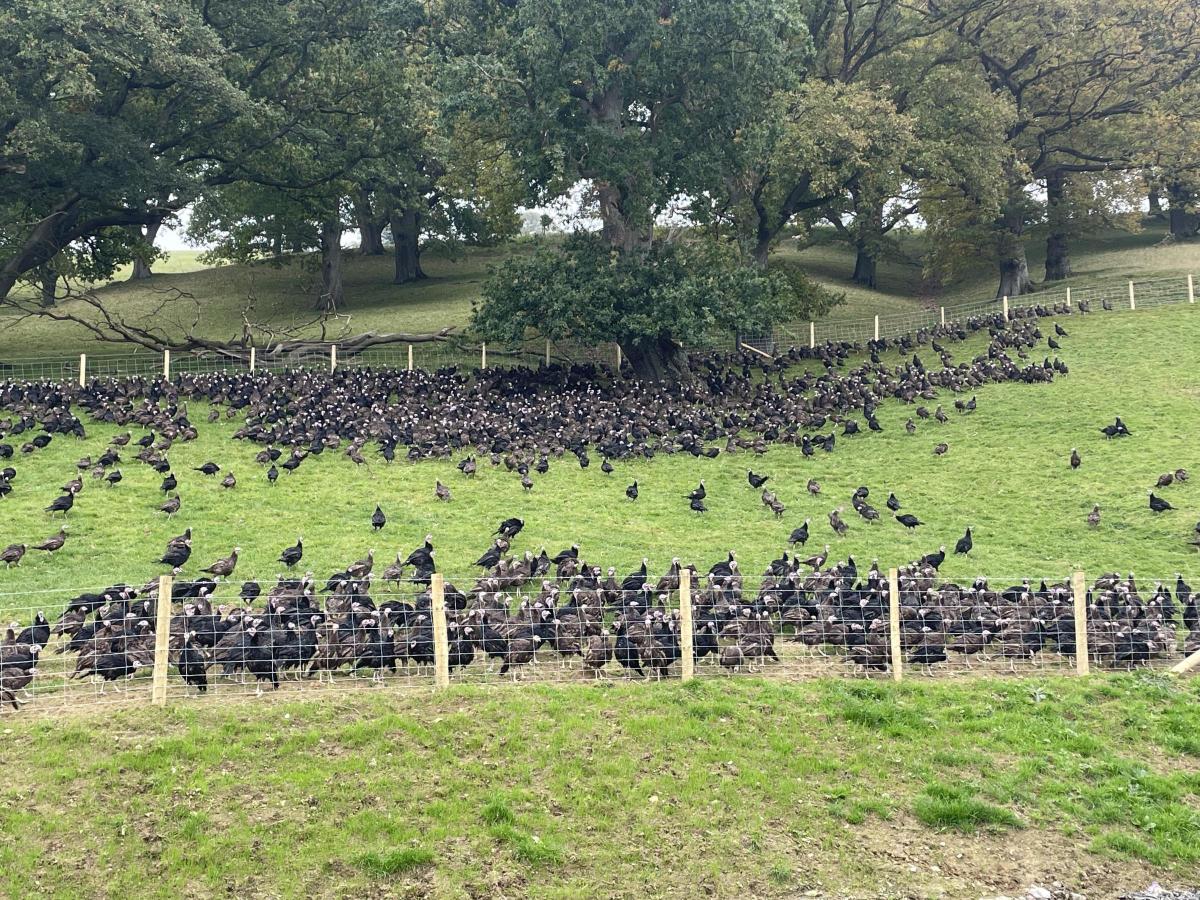
The slow-growing Heritage Bronze turkeys arrive off-heat at six weeks of age in September and are on the farm for up to 84 days.
Capestone owns the turkeys and is responsible for veterinary and medicine costs and feed, while the Williamses supply the water, straw, electric and labour, set up the shed and dispose of the manure.
They are paid a daily fee per bird and receive bonuses when they hit four targets – a flock feed conversion rate (FCR) of less than 3.2, mortality less than 2%, a welfare score of less than 15% and bodyweight targets; weekly weights are supplied to Capestone which it compares with the targets.
The weights dictate date of slaughter which is generally from the third week of November through to the second week in December.
That timing allows the Williamses a month to clean the shed out and prepare it for housing ewes for lambing. The last of the ewes are turned out to graze with their lambs in April.
Cows are housed for four to six weeks for calving and it is then time to prepare the shed for the arrival of the turkeys.
The turkeys are therefore on the farm at a time of the year when there is less demand on the family’s time.
The new enterprise has enabled them to restructure their business – they had been carrying up to 2,000 store lambs in the autumn but the turkeys have replaced that enterprise.
The birds love to range – growers must provide an acre of range with tree or natural cover for every 1,000 birds.
Russell and Fran do the bulk of the work associated with the turkeys, taking care of their daily feeding and watering needs and walking the sheds about three times a day, while Harvey, with the aid of a straw chopper, beds the sheds.
Good husbandry is key, says Fran “Anyone who has a good level of stockmanship and attention to detail will generally do a good job of it, and if you like birds you’ll enjoy the work as they are real characters and generally calm and easy to work with.’’
There are audits and high standards and strict criteria to adhere to, she adds. “We want to do a very good job as we want the birds to go from here healthy and as well grown as possible.
“The Capestone team are always available and offer excellent levels of support.’’
With political uncertainty and major changes sweeping through agriculture, the turkey growing diversification gives Russell, Fran and Harvey security of income.
“It is the first time in my life that before anything even arrives on the farm we know what we are going to get paid if we do the job right,’’ says Russell.
Growing turkeys has restored the family’s faith in Christmas, he adds.
“We were sitting around the table with the family, eating our Christmas meal last year, and felt a genuine sense of responsibility for the enjoyment of others who were also tucking into their own turkey dinners.’’


Share