


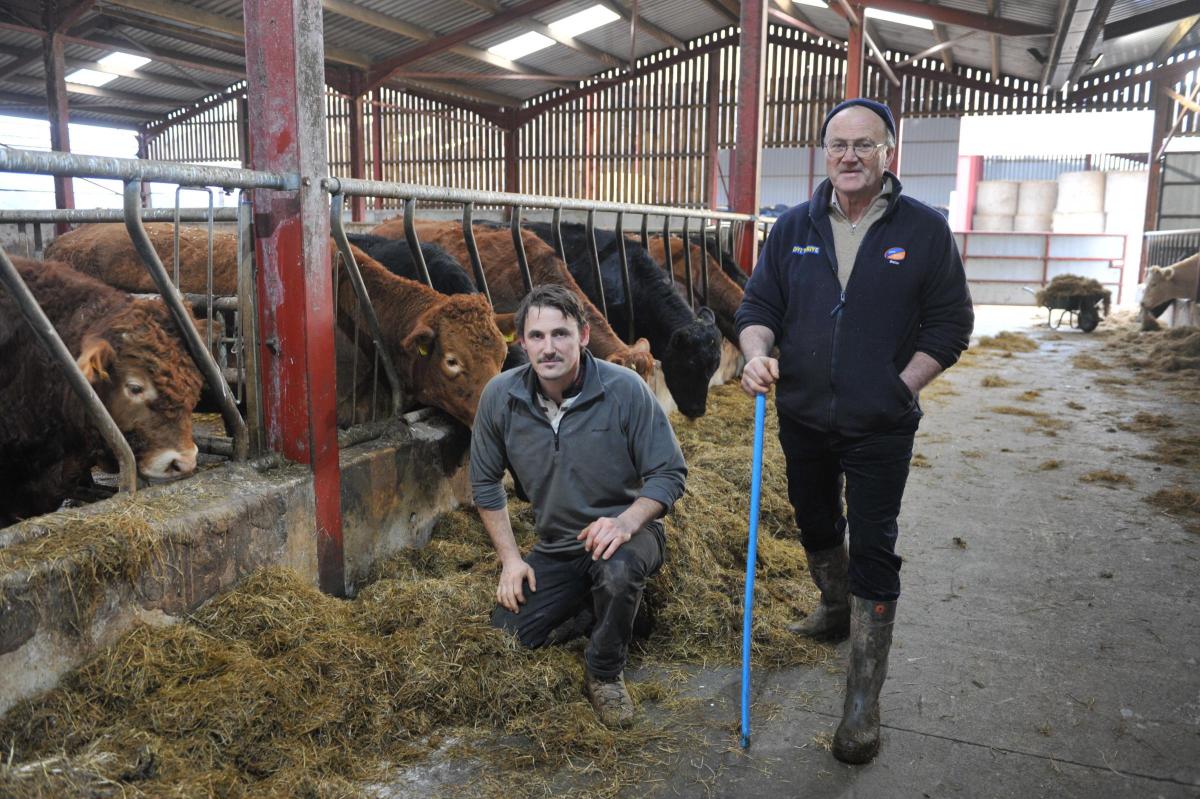
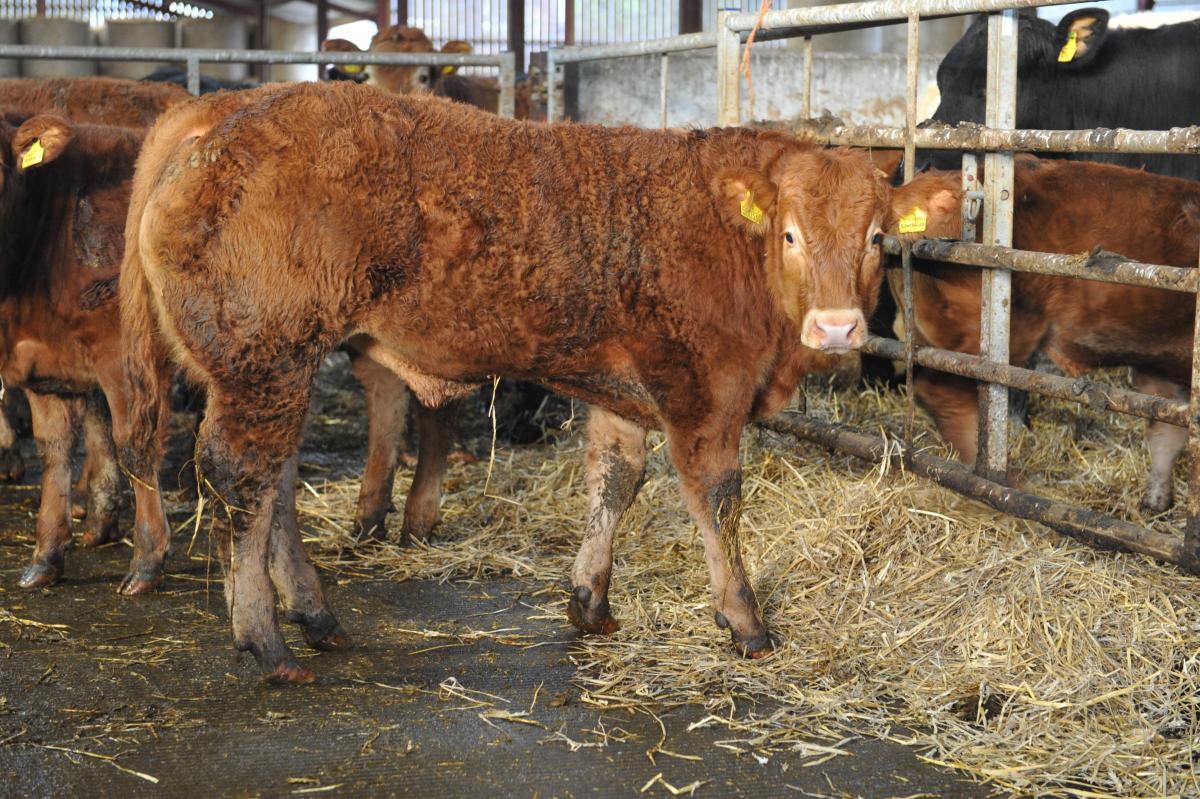

A beef housing system in Powys has been designed to minimise labour, maximise animal health and welfare and protect the farming system from increasingly frequent weather extremes.
The Morris family replaced outdated buildings at Lower Drostre, near Brecon, with a shed for 150 cattle, a system that allows routine of bedding, mucking out and feeding to be completed in less than 90 minutes by one person.
As Griff Morris, who farms with his son, Gareth, and his wife and daughter-in-law, Carolyn and Steph, puts it: “A tired, stressed stockman bogged down with an inefficient system cannot operate as they should.’’
The farmstead had old, outdated and ill positioned buildings when the Morrises bought it in 2015 therefore some were taken down, recycled and repositioned and sections added.
“It also became apparent that we needed to adapt our system to be resilient to climate change,’’ says Griff.
“If you want the best from your farm without harming the environment, given possible continuous rain and possible continuous drought, stock must be housed for well over half the year.’’
The shed had to be simple and inexpensive, one that could be managed by one person in the minimum amount of time.
Routine work should be as time and motion efficient as possible to give enough time for stock handling, assessment, evaluation and necessary maintenance, Griff reckons.
“And to minimise the number of those never-ending days that we all sometimes endure,’’ he adds.
The building is designed around a central feed passage with calving pens at the rear.
Nine housing pens can be shut back from the 18-foot scrape passage in front. Feeding off that bedded area are up to 24 20 ft x 10 ft calving pens which double up as creep areas when calving has finished.
These can be shut back to create a scrape passage; when scraped, the cattle remain held back to allow straw bedding to be blown into the pens.
The calving gate is an essential feature as it makes calving much smoother, safer and is operator friendly.
The diagonal feed barriers give every animal an eating space - cows don’t have to queue up to eat and the diagonal design stops bullying.
All the doors are designed to prevent wildlife getting in.
Ensuring good ventilation was a priority when the shed was designed so it is open-sided, but galebreakers have since been installed along one side.
With a view to future-proofing the business, the Morrises have since added to the infrastructure with two covered silage pits and a dry muck store with drains to a large effluent tank - a £120,000 investment supported by a 40% Sustainable Production Grant.
This, combined with both manure and soil testing facilities, keeps risks to the environment and costs down because nutrients are only applied according to the needs of the grassland.
“It is about learning to use what we have, to make sure that our system can absorb the changes we are seeing in the seasons, and that means making proper use of the building,’’ says Griff.
“We are very mindful of complying with the new Sustainable Farming Scheme (SFS). If we didn’t have the right buildings then, like others, we would be less able to adapt.
“We must have the facilities to protect the stock, to make proper use of our investment by keeping them off the land when it is very wet or dry.’’


Share