


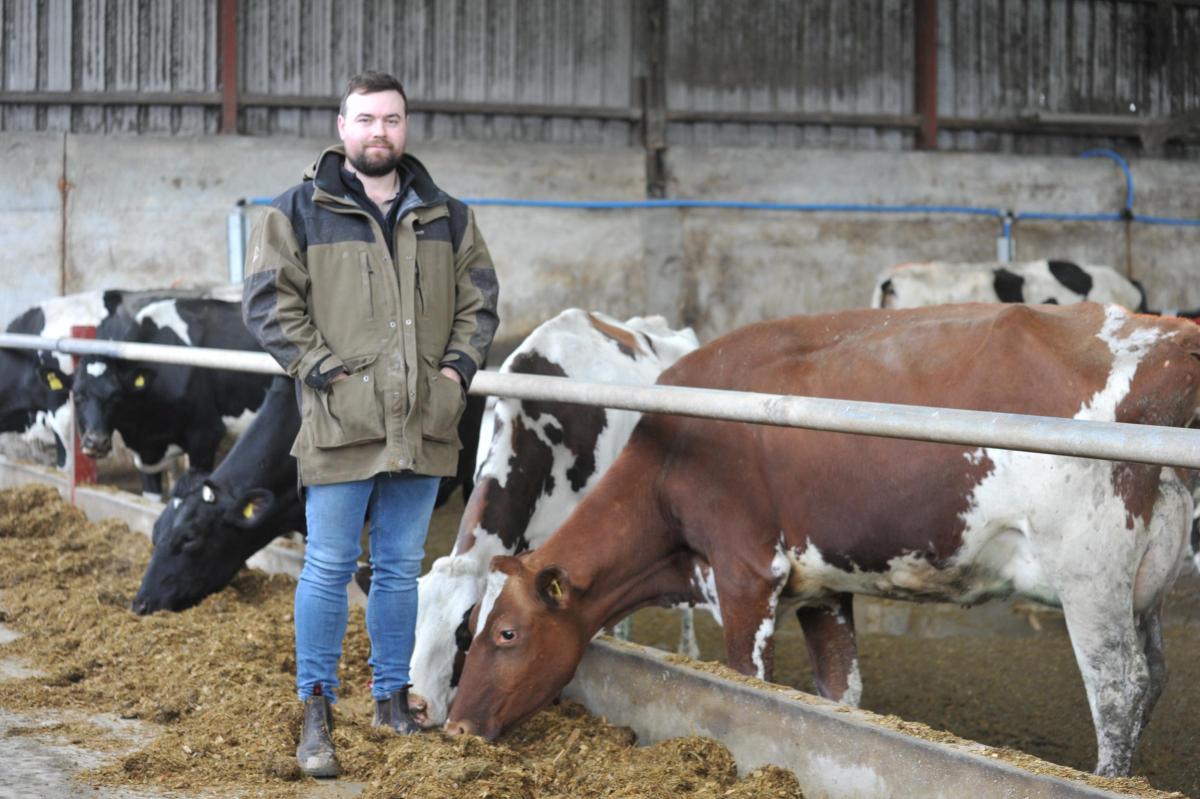

Growing beans and sunflowers in forage maize has enabled a Pembrokeshire dairy farm to increase protein level in that silage to nearly 14%.
Volatile feed prices prompted the Evans family to explore alternatives for supplying protein in the rations for their growing heifers and 200-cow pedigree Holstein herd at Berryhill Farm, Newport.
With 150-200 acres grown every year on the 380 acres farmed, maize is an integral component in the diet of those stock.
Increasing the protein potential of that acreage offered an opportunity to reduce purchased feed costs.
In some countries, notably Germany, growing legumes with maize is relatively common and successfully used by farmers to produce more protein on-farm.
- Don't miss our next edition of Pembrokeshire Farmer, available free inside the Western Telegraph on February 25
Teaming up with Farming Connect to run a Focus Farm study on this system, the Evanses are now in their fifth year of growing a proportion of their maize with legumes and sunflowers.
In 2025 it analysed at 23.7% dry matter (DM), 13.73% crude protein (CP), an ME of 10.6MJ/kg DM, a digestibility (D) value of 67, and a neutral detergent fibre (NDF) digestibility of 72%; in comparison, CP in the farm’s maize-only silage was 8%.
That protein is high quality too since it features lysine and methionine which aren’t usually present in forage and more closely associated with soya; they are prized for their ability to improve milk yield and quality, and support dairy cow reproduction.
At drilling, the maize and legume seeds are combined in a Belle mixer and planted at the same time since the seeds are similar in size, at a ratio of 60% maize and 40% legumes.
The pattern for drilling is different to a maize-only and it is crucial to get it right otherwise weeding becomes a challenge, says Jonathan Evans, the third generation at Berryhill Farm.
“We only go around the headlands twice then try to keep everything in straight lines.’’
Two climbing bean varieties, Rancho and Solgado are grown; Rancho is quicker maturing and well matched to an earlier maize variety while Solgado has a bigger pod but matures three to four weeks later than Rancho.
Different forms of mechanical inter row weeding have been trialled including with an Amazone Venterra and rotary weeding using a Rotocare.
Berryhill intercrops around a quarter of total maize acreage but in some years more – last year 80 acres were grown with around 20 acres of these incorporating sunflowers. “That produces enough to feed high end stock through the winter to the spring,’’ says Jonathan.
The stock respond well to sunflowers, he adds.
“In the first year that we added sunflowers to the mix, the youngstock grew really well on it, their coats had a nice shine and there was no coughing so for the last two years we have grown all three species.’’
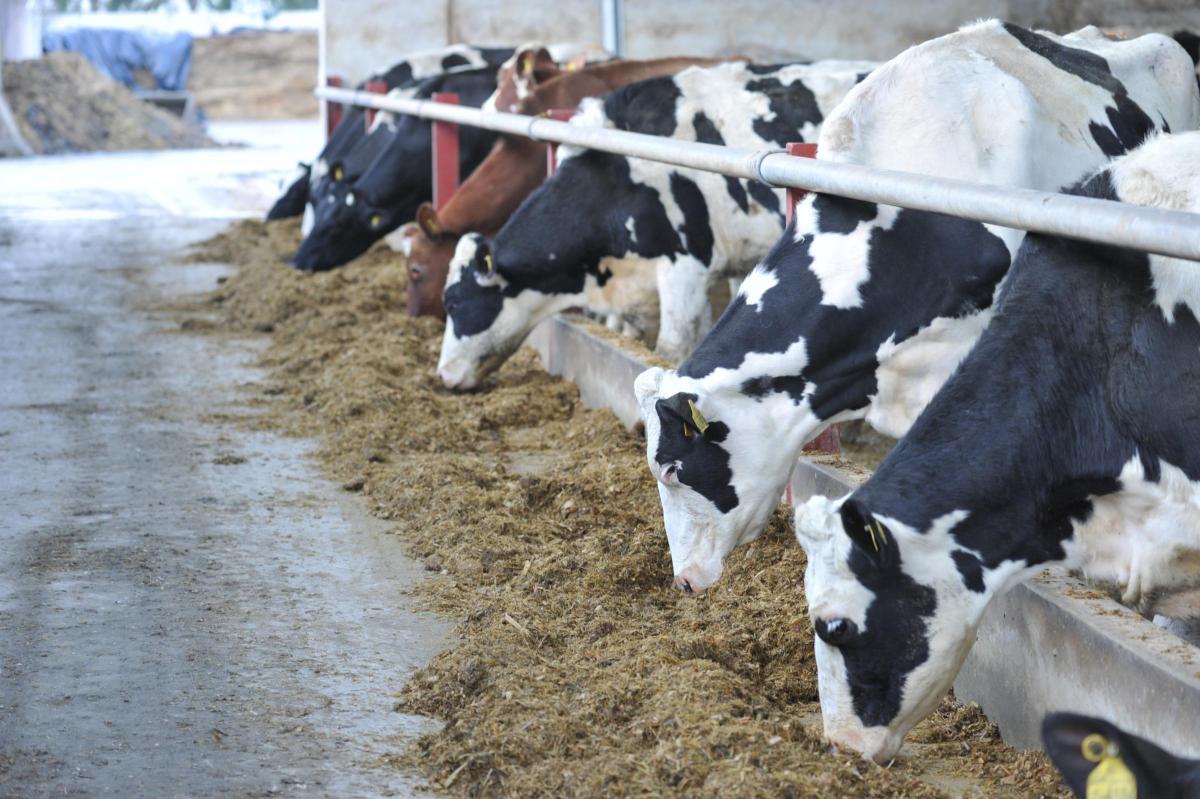
Growing heifers in the ‘Holm’ herd are achieving target weights on a ration of 20kg maize, bean and sunflower silage, 2kg hybrid rye and 1kg blend.
By including the maize, bean and sunflower mix, it has been possible to reduce blend in that ration by 2kg.
The milking cow ration is 27kg maize silage, 17kg grass silage and 8.5kg blend
Five years after introducing the system and Jonathan admits he is still learning how to get it right. “I have gained a lot of knowledge, every year throws up different challenges, but I know we will get there through trial and error.’’
Supported by milk buyer, Leprino, the farm has been working to reduce its carbon footprint and is making big progress, cutting it by 35% in the last four years.
Soil analyses from maize fields demonstrate how min-till has contributed - one field for example has 4.8 units of carbon per hectare compared to 1.7 in 2021.
Maize is fundamental to the system at Berryhill, more so now than ever as the farm is switching to robot milking this spring. Three robot milkers are currently being installed.
“Anything I can do to grow more protein is going to help with cost of production and if I can improve the soil at the same time and reduce carbon emissions it will all be moving in the direction that we want to follow,’’ says Jonathan.


Share