


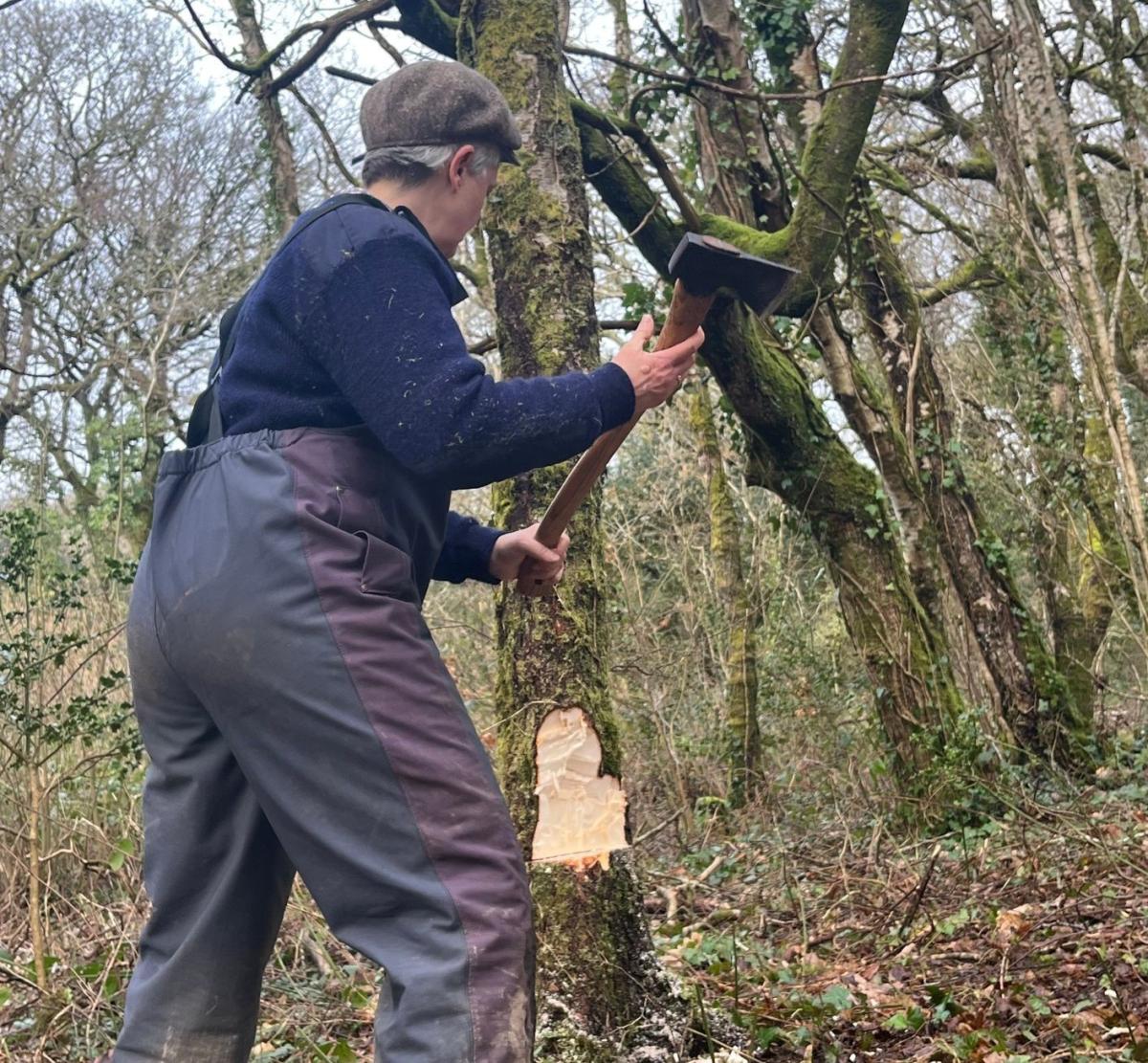
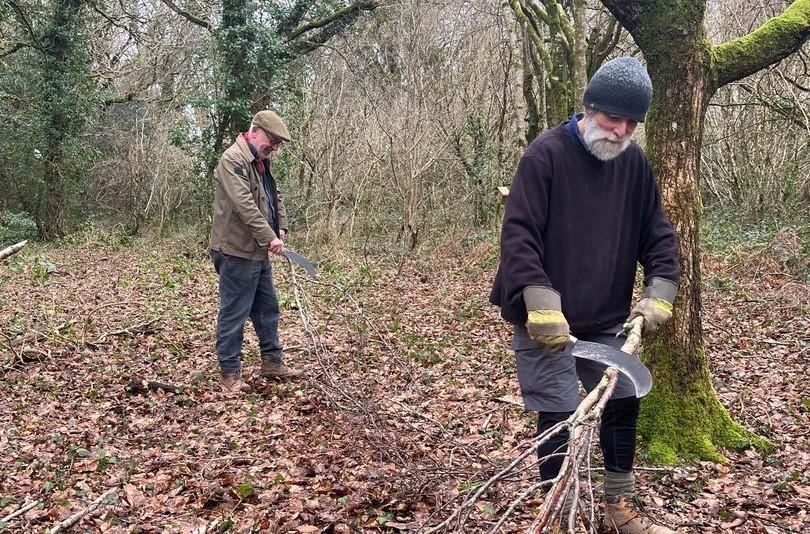

Pengelli Woods in Pembrokeshire has been alive with the sound of axes, saws, and the quiet hum of curiosity as volunteers gathered to immerse themselves in the age-old art of coppicing.
Alongside staff and students from Cwm Arian and Coppicewood College, participants spent the day learning sustainable woodland management skills that have been practised in west Wales for thousands of years.
Coppicing, a traditional technique once central to how our ancestors cared for local woods, involves cutting trees at their base to encourage new growth. This simple, cyclical method provided communities with a steady supply of timber for fuel, tools, fencing, and craftwork — all while allowing forests to regenerate naturally year after year.
- Don't miss our next edition of Pembrokeshire Farmer, available free inside the Western Telegraph on February 25
Volunteers watched experienced-hands fell trees using axes, double-sided saws, and billhooks, before taking over to process the timber themselves. They learned how to prepare small sticks for bread ovens and riverbank work, medium poles for garden supports or firewood, and larger lengths for furniture or crafted items.
Each action connected them not just to the craft, but to centuries of woodland knowledge and the rhythms of nature itself. Between strokes, participants paused to listen to birdsong, observe the forest’s seasonal cycles, and feel a deeper connection to the landscape and its heritage.
“The session was a real reminder of how our ancestors cared for the land,” said one volunteer. “It’s incredible to see how these low-tech methods were not only practical but also sustainable — lessons once again growing in relevance today.”
The CoedUNO project, part of Cwm Arian, is taking these heritage skills on tour across north Pembrokeshire with further volunteering sessions in February and March:
- 25th February, 9.30am-12.30pm, Felindre Farchog: Tree planting – fruit, nut, and native species
- 4th March, 1.30-4.30pm, CoedUNO Tegryn: Agroforestry site session
- 12th March, 10am-4pm, Pengelli Woods: Learning to process a felled tree using a billhook and saw
These sessions provide more than just hands-on skills – they are an opportunity to engage with sustainable land management, biodiversity, and local heritage practices. Coppicing demonstrates that human-led, low-tech forestry can be both productive and regenerative, offering valuable insight for a world facing climate change and energy transitions.
For more information or to book a session contact Kevin, Volunteer Organiser: kevin@cwmarian.org.uk


Share