


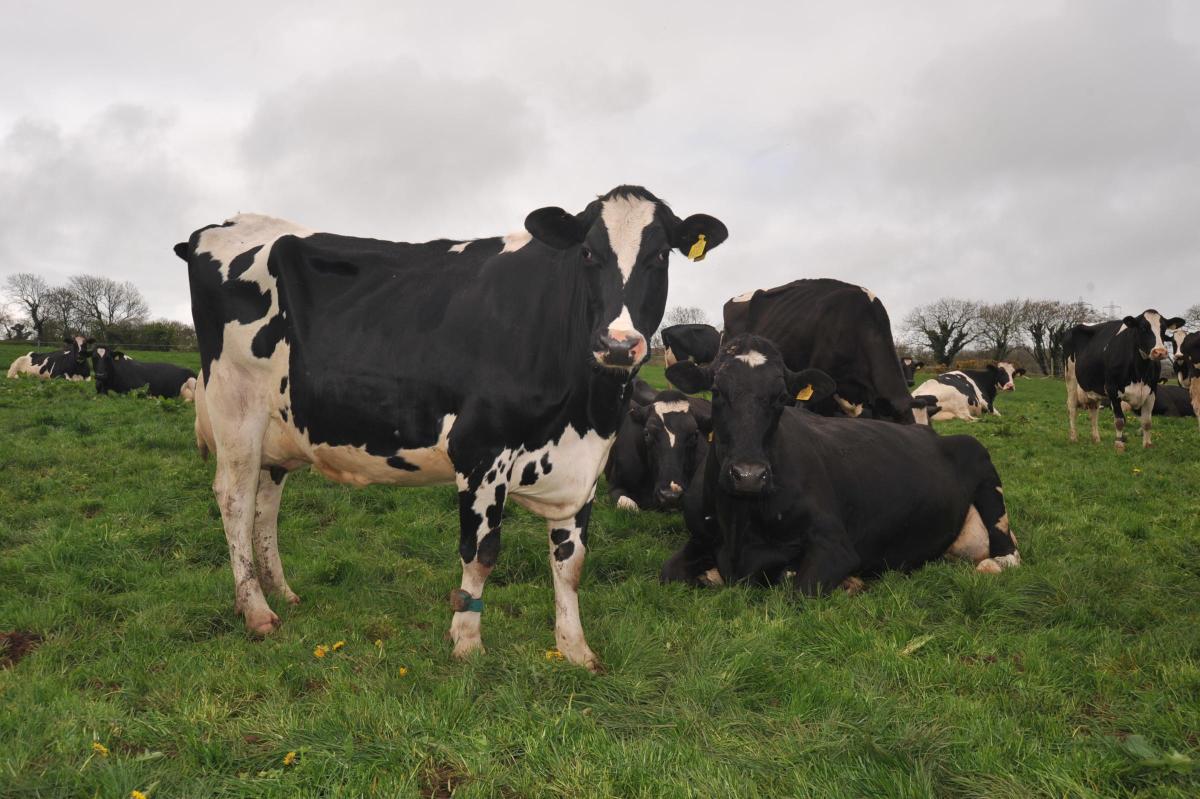
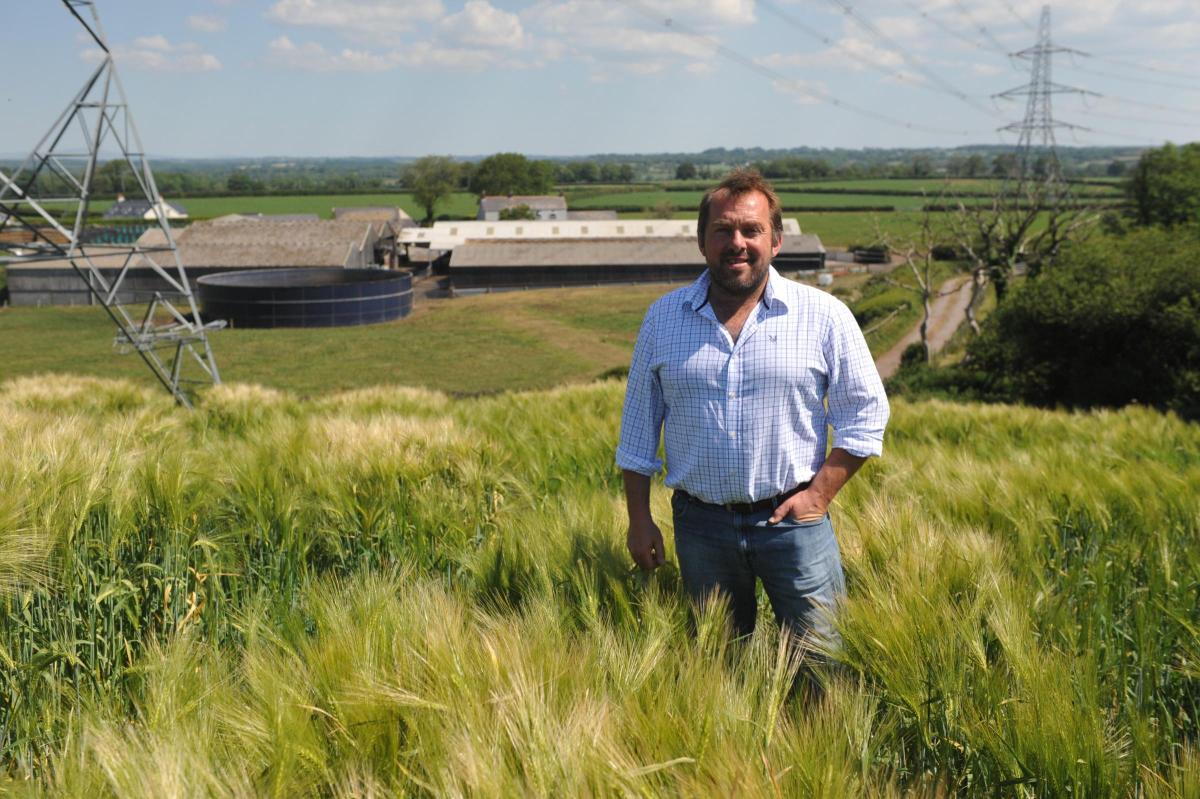

Adding homegrown wholecrop barley to the dry cow ration has driven down metabolic disorders in fresh calvers at a Pembrokeshire dairy farm.
There were just two cases of milk fever in the 400-cow high yielding pedigree Holstein herd at Poyerston Farm, Milton, in the last calving period.
Roger Lewis, who runs the autumn-calving herd in partnership with his parents, Philip and Sheila, puts this down to including wholecrop barley in dry cow diet - around 15ha of the 51ha he grows is harvested as wholecrop and the rest is crimped.
The 2025 crop analysed at 35.1% dry matter (DM), 26.5% starch and metabolisable energy (ME) of 10.8MJ/kg dry matter (DM). Crude protein (CP) at 10.2% is low compared to other silages but higher than straw which typically analyses at 5%.
Wholecrop barley is low in potassium. “It doesn’t carry the potassium loading you get in grass silage and that is a real positive when feeding to dry cows,’’ says Roger.
He grows six-row hybrid winter barley, drilled at a seed rate of 100kg/ha. His wholecrop yields an average of 30-32t/ha freshweight – this is harvested in June with a forage harvester fitted with a wholecrop header and cut at a 15mm chop length.
Working out when it is at the right stage for harvesting can be a difficult. “The straw will still be green but the grain cheesy with a bit of moisture in it, the weather can be very changeable in June so we monitor it daily,” says Roger.
He aims for a product that is 35% DM clamped.
It is in the clamp for six weeks before the early calvers are housed in the first week of August which means the additive applied at harvesting has enough time to work – this is important because stabilising wholecrop is key.
The early harvest is also a good opportunity to apply slurry.
Inclusion rate in the dry cow ration is 20kg, fed with 14kg first cut silage, 350g minerals, 150g magnesium flakes and 1.75kg blend containing Hi-Pro soya, Novapro and rapeseed – the aim is to create a diet at 14-15% CP and, crucially, has 1300g of metabolisable protein (MP).
Roger set the diet up with his nutritionist, Ken March, of Perfekt Cow Nutrition.
Ken says MP is key to minimising metabolic diseases such as ketosis and to aiding a smooth transition.
“It also ensures sufficient amino acids are available for foetal growth, udder development, and colostrum synthesis.’’
Cows are given a slow-release trace element bolus at drying off as the far-offs follow the milking herd around the grazing platform therefore don’t get the ration for the first three weeks of their dry period.
Weekly, Roger draws off cows that are 25-32 days from their due calving date - cows are dry for 50 days and first calvers for 60.
The aim is for cows to be in the transition group for 28-30 days – the earlier calvers are inseminated with sexed semen which accelerates gestation by at least a week.
In the years Roger has been perfecting the system, he has learned that driving intakes is crucial for a successful transition – he aims for an intake of 14kg DM/cow/day in the four weeks pre-calving, higher if possible.
Wholecrop works in his dry cow diet because the herd is block calving, he points out.
An attraction of growing barley wholecrop for Roger is how it fits into a two-year, three-crop rotation.
Winter barley follows a grass field which is ploughed in autumn and the cereal harvested in June.
Once the barley is harvested 25kg/ha of Italian ryegrass seed is scratched in as a cover crop and either cut as silage in the autumn or grazed; it is again harvested for silage in mid-April and followed immediately with a crop of maize.
Winter barley is drilled after the maize is taken off at the beginning of October.
“We then either do another full lap with the winter barley rotation or it leads us back into a longer term grass reseed,’’ Roger explains.
“Because we harvest the wholecrop in mid-June there is a big chunk of the growing season left so it gives lots of options, you could easily go in with a catch crop of stubble turnip or rape.’’


Share