



A natural feed additive has helped a Welsh free range egg producer transform bird health and performance.
Seven years ago George Wozencraft was dealing with a continual cycle of infectious bronchitis (IB) and the financial consequences of that disease.
Treating the flock with antibiotics only offer a brief respite before the highly contagious respiratory virus returned, leading to mortalities and a big drop in egg production.
IB would leave the birds susceptible to other health challenges from a secondary infection.
With antibiotic use and veterinary costs at a much higher level than George was comfortable with, he researched strategies for bolstering flock health and that resulted in in adding humic acid to bespoke rearer and layer rations formulated at the feed mill.
Humic acids are naturally occurring compounds and are increasingly being recognised as a nutritional tool to supports bird performance.
Peer-reviewed research reports improvements in egg numbers, egg mass and shell thickness when humic acids are included in layer diets, and better feed efficiency.
In broader poultry research, humic substances have also been associated with improved nutrient utilisation and reduced nitrogen losses, which can contribute to lower ammonia pressure and a more favourable house environment.
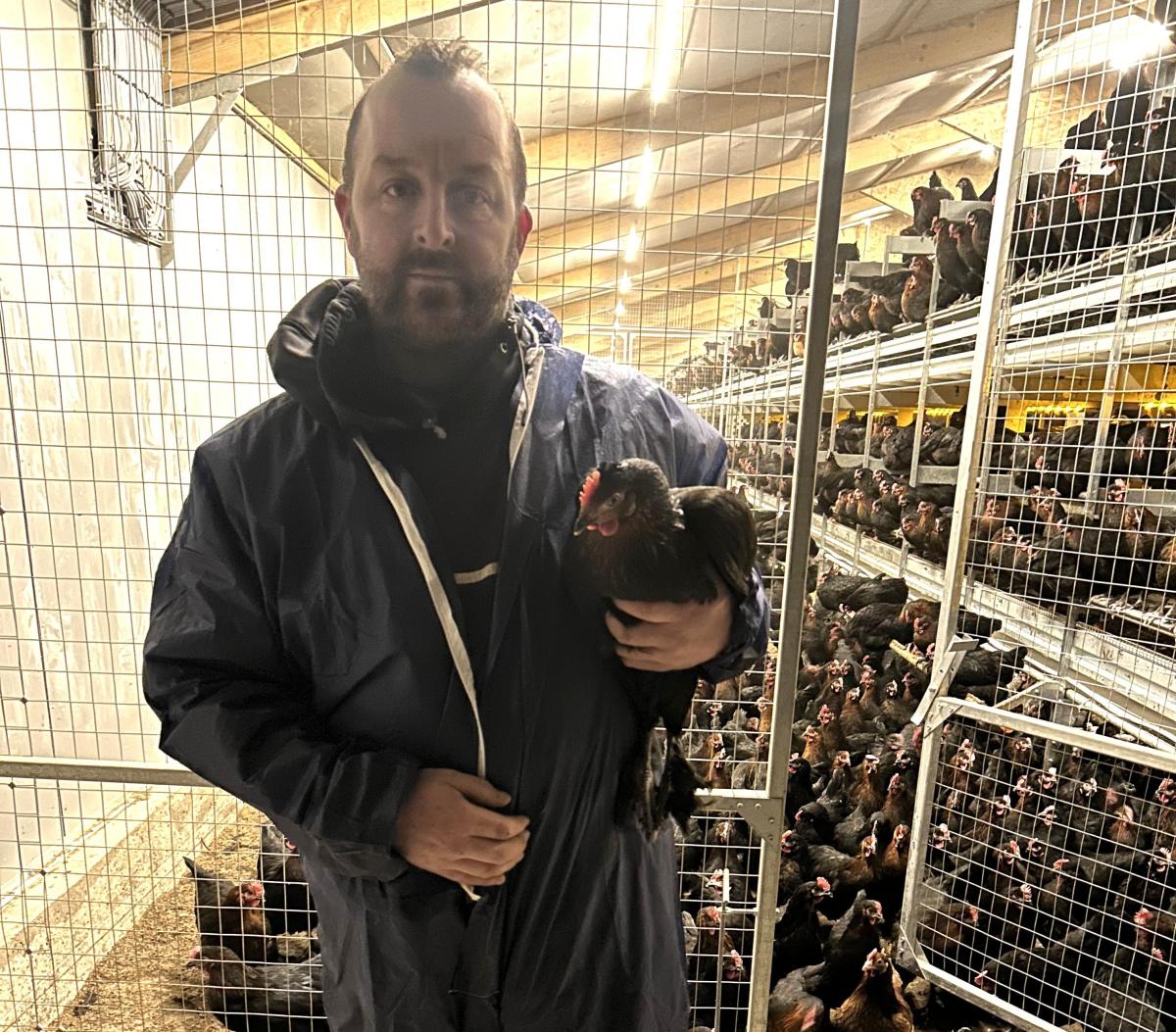
They stabilised bird health in the flock at Glanalders, Nantmel, Radnorshire.
“Since using humic acid, those IB-related dips that used to show clearly on the production graphs are no longer evident on our farm,’ says George.
“I’m not making a scientific claim, but from my experience that change has made a big difference to stability in the flock - we get a nice continuous flow of eggs.’’
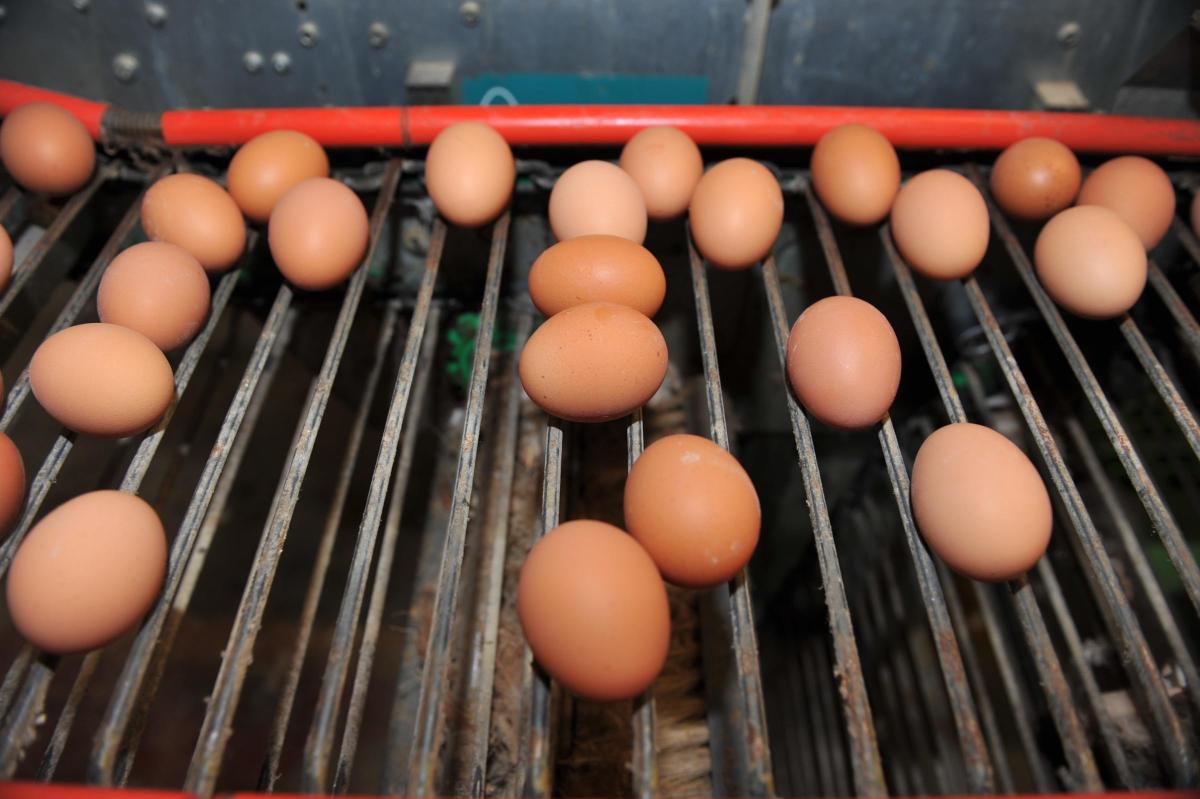
The last cycle of hens produced 14 eggs/bird more than the breed average, worth an additional revenue of £37,300 across the flock of Burford Browns.
For George capturing an extra margin of £2/bird is an important milestone
The farm diversified into egg production in 2011.
The business also produces suckler beef and lamb from a flock of Improved Welsh and Welsh Mule ewes but when George joined his grandfather, Abraham, and father, Malcolm, on the farm, an additional source of income was needed.
They started with a 16,000-bird flat deck system, producing eggs for Stonegate from Clarence Court hens, but in 2025 converted the existing shed to multi-tier.
The last four flocks have been Burford Browns, a switch George made to supply Waitrose.
Unlike the standard hybrid he previously kept, he says it is a more challenging bird as genetic improvement has been slower but the breed captures a higher price for a premium egg.
What is no longer evident though is the IB challenge that previously plagued Glanalders, a major positive for the bottom line of the business.
While George accepts that there may be other contributory factors, he believes humic acid plays a major part in supporting health and production.
“I’ve noticed drier litter and manure, fewer dirty eggs, and a more pleasant shed environment from less odour, ventilation is easier to manage.’’
Adding humic acid to the premix costs the business £0.27/bird over the full laying cycle, approximately £0.07 per dozen eggs laid.
Although a direct cost, George says there is a cost benefit from not only achieving better and consistent production but from having fewer mortalities and lower vet and med expenditure.
“It is a very small cost in the context of the benefits seen.
“Having fewer health dips overall gives me the confidence that keeping birds in better underlying condition makes them more resilient to challenges.’’
Feed conversion efficiency is very good too, he has observed.
“It stands to reason that if the gut is healthy it is better able to convert the feed and you get a more efficient bird.
“Previously, feed intake tended to rise after antibiotic treatments and then fall away again, now intake is much more consistent.’’
Use of humic acid has become an established part of his system, George adds.
“I try to be proactive with bird health, and the extra intestinal support has paid off, particularly when year-on-year consistency and feed efficiency are important to the business.’’


Share