


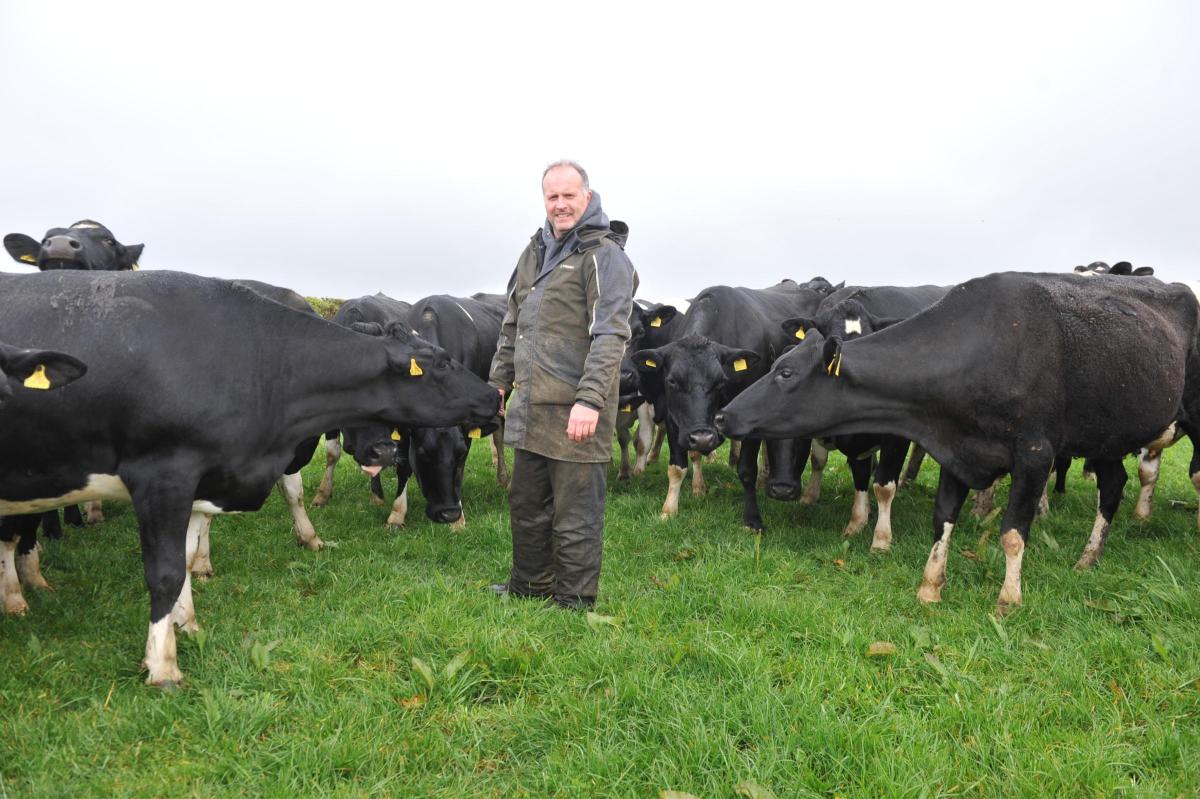
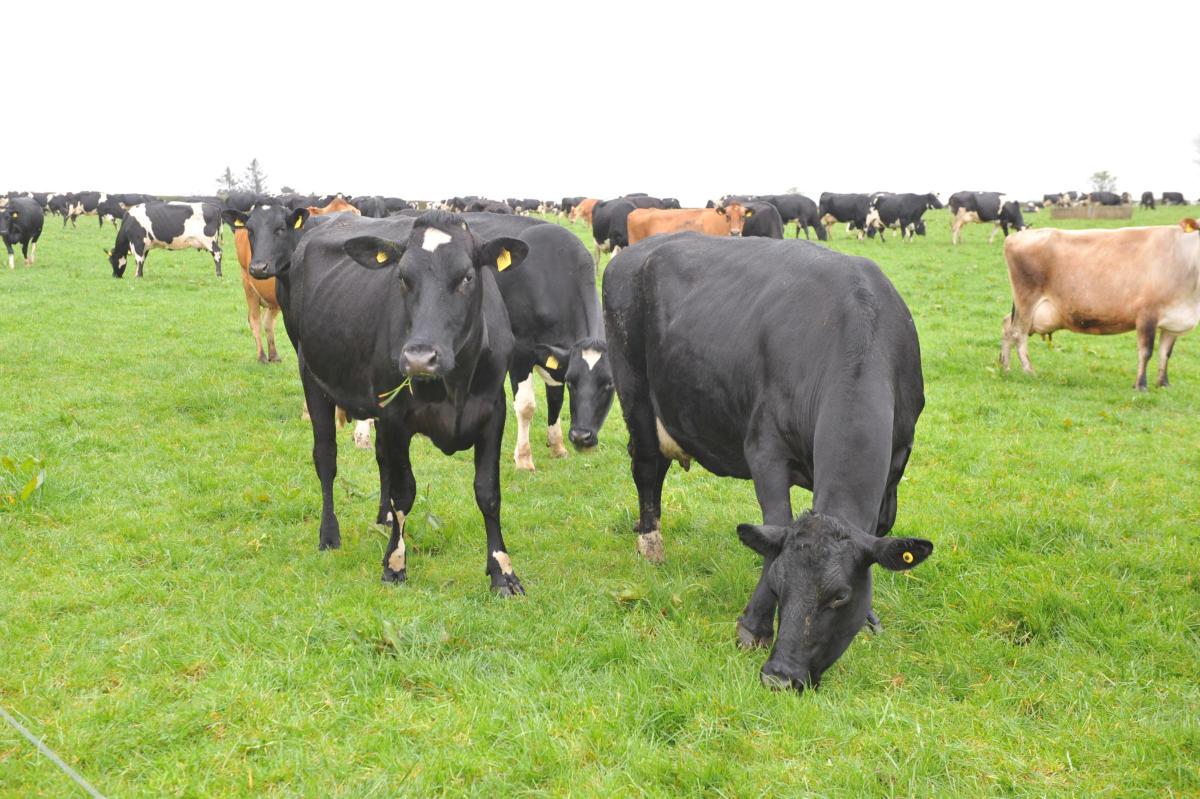

A Carmarthenshire dairy farm is capturing more than half its milk yield from forage by producing high quality grass and maize silage and managing pasture well.
Gwyndaf Thomas milks 300 autumn-calving cows at Penygraig near Meidrim, where the mostly British Friesians produce an annual average milk yield of 6,800 litres.
The milking platform is densely stocked at 5.5 livestock units a hectare (lu/ha) but by applying good grassland management rules and feeding silage at 12ME and 16% crude protein (CP), 3,800 of those litres come from forage.
Penygraig has 55ha of productive land which forms the grazing platform - the remainder of the 81ha is made up of rough grazing and woodland.
Gwyndaf also owns 93ha a mile and a half away from Penygraig where he grows silage and maize and runs 120 heifer replacements.
Every blade of grass at Penygraig is dedicated to grazing while five cuts of silage and maize are produced on the offlying block.
Gwyndaf aims to make silage at 12ME (metabolisable energy) and 15-16% CP – and the 2026 first cut was at 28% dry matter (DM) - values he describes as “critical’’ for autumn calving.
“We are going against nature by expecting cows to milk well in the autumn, making quality silage is key for the job,” he says.
Multiple cuts are taken from young leys and silage fields are reseeded every three or four years with short-term high yielding Italian ryegrass varieties.
Contractors are used for silage making with grass wilted for 24 hours and an additive applied. A big emphasis is placed on consolidating the clamp.
“Rolling the pit well is critical, you can’t cut corners,’’ Gwyndaf insists.
The clamp is covered with cling film and a double layer of plastic silage sheet.
The winter ration consists of 30kg grass silage, 15kg maize silage and a 4kg blend made up of 30% wheat, 20% wheat feed and 50% maize distillers - up to 4kg of a 16% high energy cake is fed in the parlour.
Gwyndaf rents 20ha of land where he grows winter oats to either feed as wholecrop or to combine.
Fertiliser is applied “little and often’’ - 125kg/ha (57kgN/ha) of protected urea in early March, and a slow release fertiliser of nitrogen, sodium and sulphur across the grazing platform at 100kg/ha (28kgN\ha) every four weeks from mid-April.’’
Silage land gets a dressing of slurry after each harvest followed by a N and potash fertiliser on land not earmarked for maize. On the maize and oat ground, other than fertiliser going down the spout with the seed, a foliar feed is used.
Cows graze by day from mid-March, supplemented with a ration of silage and blend at half the winter rate when housed at night until they are at grass full time from 10 April.
“With a high stocking density on the grazing platform you could argue why not turn out full time earlier but if I did that, by the time the herd had gone around the platform once, I would need to house again,’’ says Gwyndaf.
“The cows have been out as early as mid-February though, it all depends on weather and ground conditions.’’
The housing infrastructure - a slatted floor and a central feed passage - makes feeding relatively straightforward.
Housing cows once they have calved, from 1 August, allows a big wedge of grass to build up over the autumn and winter to allow opening covers of at least 2,800kg DM/ha.
Once cows are indoors the platform is grazed by bulling heifers.
Calving is in a 12-week block and mating starts at the end of October - five weeks of insemination with British Friesian sexed semen and some conventional straws used on repeating cows.
Insemination then switches to Belgian Blue genetics and Hereford and Limousin stock bulls are used as sweepers.
Once cows calve they are on a winter ration. “We would rather house earlier and turn out earlier in the spring because in theory they should be back in calf by then and be more tolerant to being challenged,” says Gwyndaf.


Share