



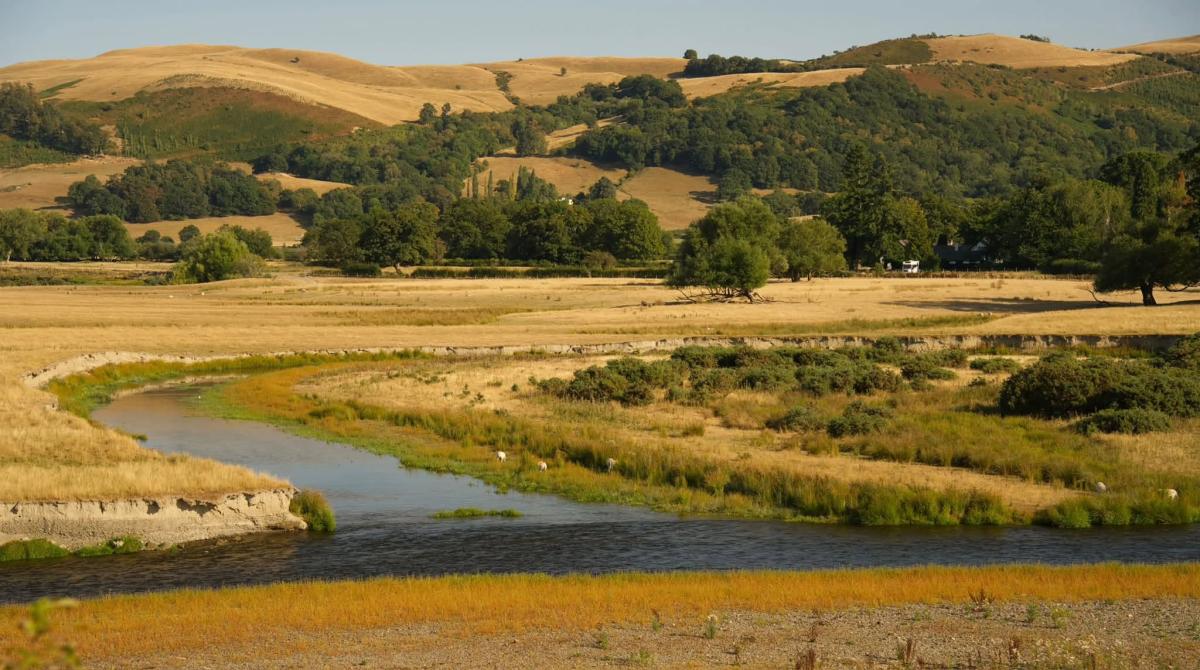



Farmers across Mid Wales are being forced to feed cattle winter supplies months earlier than planned as prolonged dry weather continues to impact farms, according to a dairy farmer and local MP.
Glenn Lloyd, who runs Daisy Bank Dairy at Gate Farm in Llandyssil between Abermule and Montgomery, said this summer's drought has had a significant impact on grass growth, milk production and water supplies.
The third-generation dairy farmer said the conditions had been among the most challenging he had experienced.

"I always told myself when I was younger I was never going to turn into a weather-whinging farmer, but it's getting really difficult not to be now," he said.
"Drought is ridiculously dry here and across the whole of Wales and most of the UK. It's been horrendous. The level of heat and how fast it came for the cows, it wasn't fit for animals. It wasn't fit for us as humans."
Mr Lloyd said the prolonged dry spell had left many farms struggling.
"The big thing for us is yield loss, the amount of milk that the cows give. So many farms are struggling for water. We're struggling for water. Don't get me wrong, we're fine at the moment, but it's making us re-evaluate our investments and what we're doing because the whole farm is based around grass production and cows out eating grass."
Farmers forced to rethink operations
Mr Lloyd said the experience had highlighted the need for farms to adapt to increasingly extreme weather conditions.
"Our sheds are great for them in winter, but they're not good in the summer because of the heat," he said.

"We're going to have to invest in fans and, through extreme heat, we're going to have to keep the cows in, which is against everything that we believe in and what we want.
"But animal welfare has to be the first priority, and that's it."
He also revealed he had spoken to other farmers at the Royal Welsh Show who reported serious health impacts on livestock during the heatwave.
"I was at the Royal Welsh Show a few weeks ago talking with a few guys and some farms have been experiencing cows having heart attacks because of the heat," he said.
MP calls for investment in water supplies
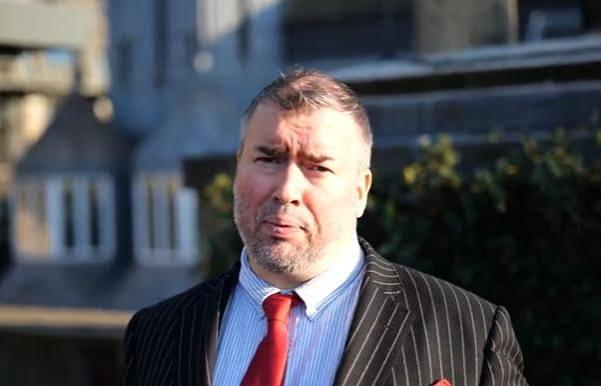
Steve Witherden, MP for Montgomeryshire and Glyndŵr, recently visited the farm and said farmers in the area were on the frontline of the climate crisis.
Standing in a visibly parched field, he said the effects of the drought were clear to see.
"My farming constituents really are at the forefront of the climate crisis," he said.
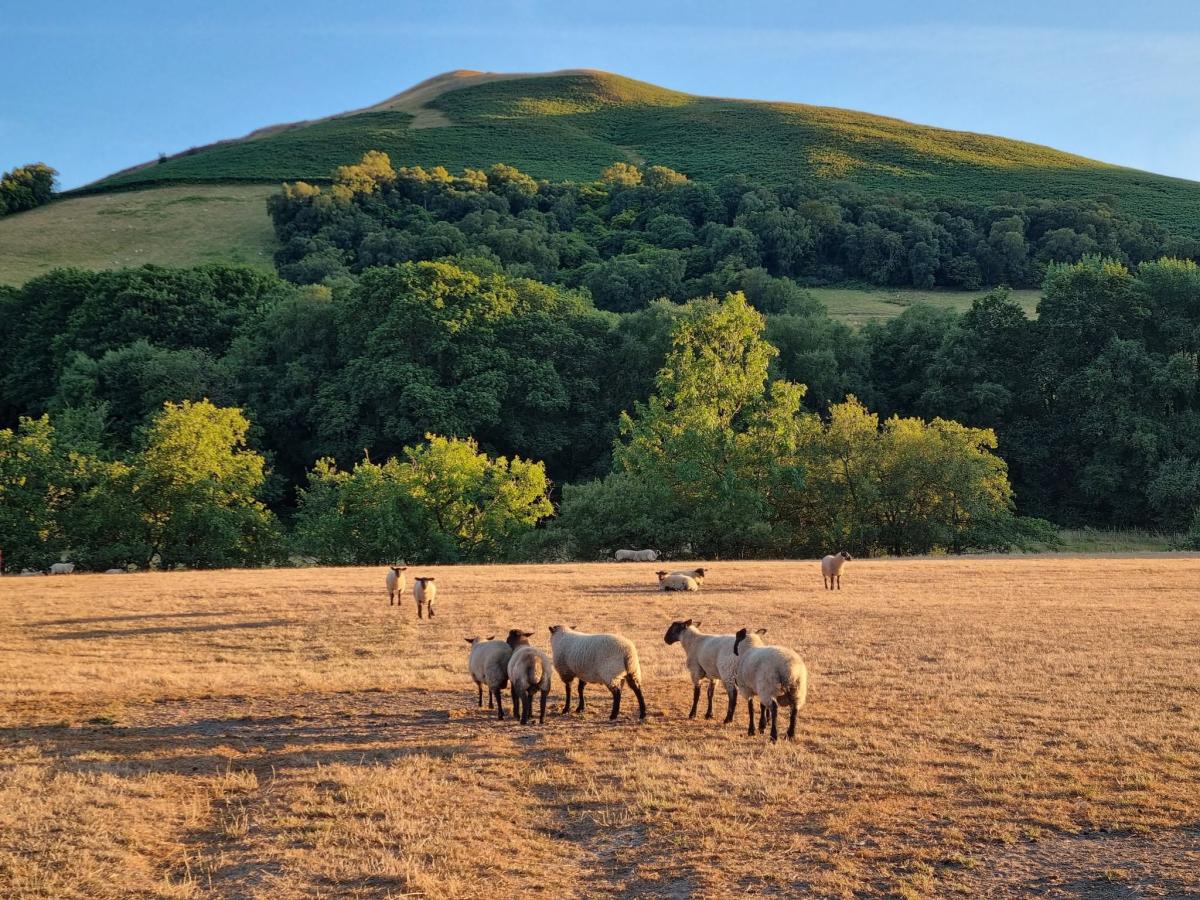
"You only have to look at the field behind me, the colour of the grass. It's obvious to see that we're in drought now."
Mr Witherden said some farmers had already started using silage normally reserved for winter because grazing conditions had deteriorated so significantly.

"The cattle back there have found some grass to graze upon, but I've been speaking with farmers only a few moments ago who are having to feed silage to cows that's been earmarked for the winter because of the lack of availability of grazing fields that they can access in the here and now."
The MP called for greater investment in infrastructure to help communities and farms cope with future droughts.
"Severn Trent need to address this issue," he said.
"This is an area which needs pumping stations. It needs reservoirs so that the communities, the farmers in this area, can get the water that they need to exist and to thrive."
Water company response
Hafren Dyfrdwy said it recognised the challenges the prolonged dry weather was creating for farming businesses but insisted supplies in the area remained resilient.
A spokesperson said: "We recognise how challenging prolonged dry weather can be for farmers, particularly where it affects grazing, livestock and day-to-day farm operations.
"Supplies in the area remain resilient and come from a combination of groundwater sources and from the River Severn but the record-breaking hot and dry weather has meant we have seen higher demand.

"We plan carefully for both current and future demand and have significant plans for demand management, including replacing water mains and reducing leakage, to help protect supplies for customers and communities over the long term."
The company also encouraged farmers concerned about water availability to take practical steps to safeguard supplies.
The spokesperson added: "For farmers worried about water availability, we would encourage practical steps including checking taps, troughs, pipes and other fittings for leaks, setting up rainwater bowsers and speaking with neighbouring farms about opportunities to share or trade water in an emergency.
"Farmers who rely on private water supplies should seek advice early if their supply runs low, including through local authority guidance and information available on our website."
With dry conditions continuing across much of Wales, farmers are increasingly warning that the long-term impact on grass growth, livestock production and water supplies could be felt well beyond the summer months.
Support available for farmers affected by drought
Rural support charity RABI has also announced a £2 million Emergency Drought Grant scheme for farming households affected by the drought.
Eligible farm owners and tenant farmers in officially designated drought areas in Wales will be able to apply for £2,000 grants from September 14.
The charity said the funding is intended to help households facing financial pressures linked to reduced grazing, rising feed and water costs, and lower yields.
More information is available at rabi.org.uk/drought-support.


Share