


THE "best habitat conservation workers in the business" are back on the Clwydian Range’s busiest peak.
Belted Galloway cows have returned to Moel Famau to help boost biodiversity.
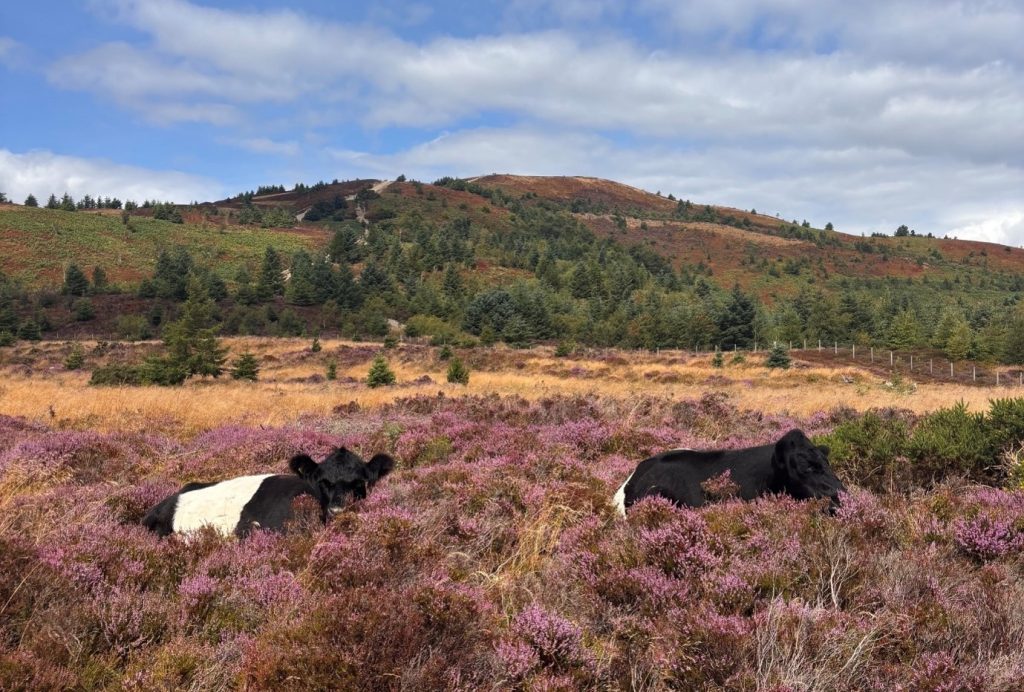
Peek-a-moo – two Belted Galloways relaxing in the heather on Moel Famau
The animals best munch away at plants and small trees that are growing on their patch of moorland habitat, keeping it in the right condition for nationally and internationally important species to continue to use and thrive in.
Belted Galloways, who have been grazing this kind of landscape for centuries. They are therefore much more able to handle harsh hillside weather and the rough grazing available than other less hardy breeds.
Their hooves also help to break up dense vegetation and control scrub cover, helping to create small microhabitats for wildlife.
These cows are part of the partnership working of Natural Resources Wales and the National Landscape, using traditional methods to manage the landscape.
This is a method known as conservation grazing, using grazing animals to conserve the vitally important habitats around us for the continued use of the species that rely on them. In this area this includes black grouse, nightjar, skylark and more.
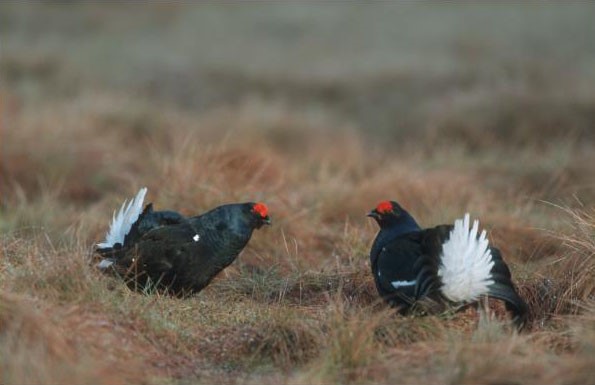
Black Grouse (Tetrao tetrix), one of the fastest declining birds in the UK
One of the species that benefit from the cows’ handywork is the Black Grouse. This is the fastest declining bird in the UK and has already been lost from many of its previously habited areas in England.
They are beautiful birds that put on a stunning display as part of their mating ritual – the males will come out into the open in the early hours to dance and display their shining white plumes to attract the attention of a female in a display known as “lekking”.
They require open spaces for this dance but also require areas to hide and nest that provide a bit more cover and security.
The habitat management done by the four-legged conservationists in conserving the mosaic of flora around them, stopping things from growing too tall or too wide, preserves both the Black Grouse’s home and its stage – work that is vitally important for a species that is declining largely due to habitat loss.
The Clwydian Range and Dee Valley Area of Outstanding Beauty team has seen the impact of the cows’ efforts to help the Black Grouse during its annual Black Grouse count, with numbers of these birds steadily increasing in the area.


Share