



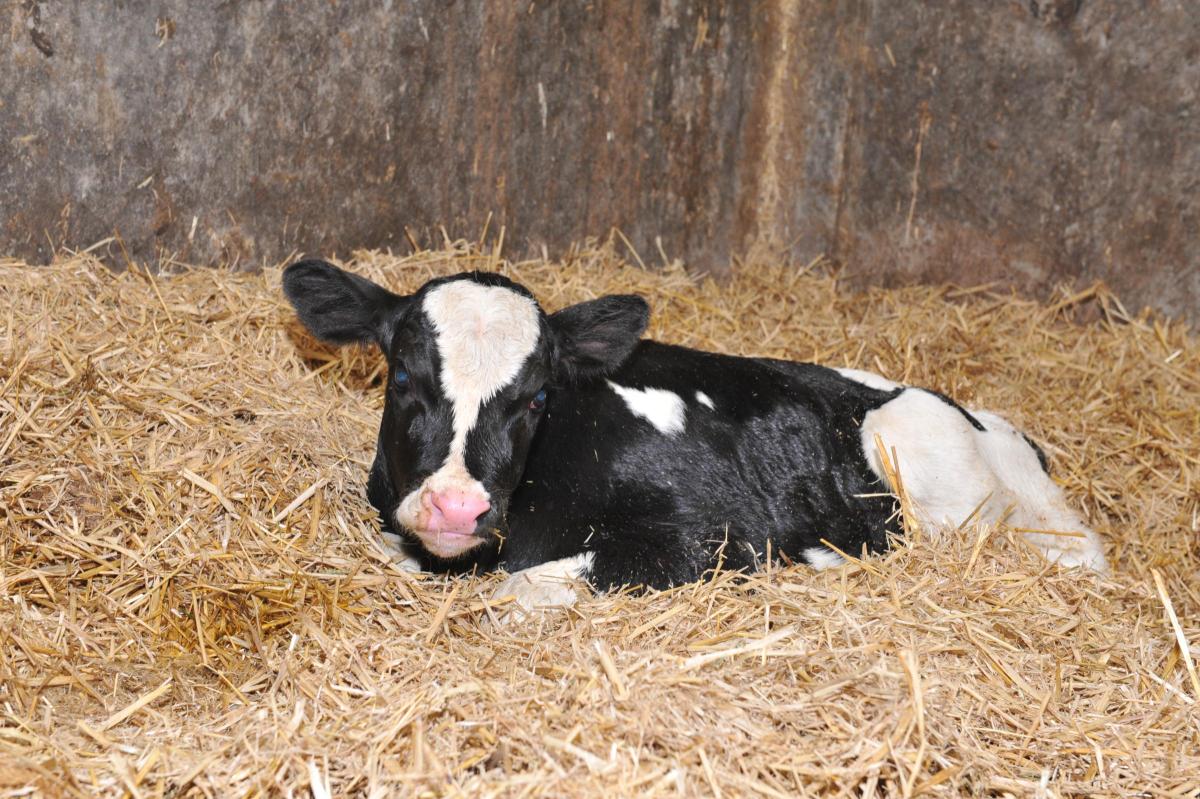

A Pembrokeshire dairy farm is heat treating colostrum to reduce the bacterial load in this all-important first feed for newborn calves.
An unprecedented spike in calf mortalities and an animal testing positive for the bacterial pathogen Mycoplasma bovis prompted Geoff and Lucy Lewis to invest in pasteurisation equipment.
Pasteurisation of whole milk is becoming more commonplace on dairy farms but heat treating colostrum less so, in part because it takes time and labour during a period when resources are already stretched.
The process is also trickier than for pasteurising milk as colostrum’s high fat content can give it a butter-like consistency when heated.
But for the Lewises, who farm at Pearson Farm, St Brides, with their son, Dylan, pasteurising colostrum is proving to be a useful tool in optimising calf health.
Antibody-rich colostrum strengthens a neonatal calf’s immune system, reducing the animal’s future risk of contracting a microbial infection.
However, when that feed is contaminated with bacteria, it will reduce absorption of those immunoglobulins and expose the animal to pathogenic microorganisms.
In August 2025, post mortems after the loss of six of calves at Pearson Farm revealed the presence of M. bovis in the lungs of one, the animal likely to have contracted it from its dam’s colostrum.
Pasteurisation offered the opportunity to kill that bacteria in colostrum and whole milk so the business invested around £13,000 in two pasteurisers, part-funded by a Welsh Government efficiency grant.
Since then, all colostrum and whole milk for a calf’s first two-and-a-half weeks of life is pasteurised.
Calf health has significantly improved, says Geoff, who produces milk from 300 pedigree Holsteins.
“We have never had much of an issue with scours, it is pneumonia and other respiratory problems that are our challenge, but we get less of those now and are treating far fewer sick calves.”
Colostrum is harvested into a dump bucket and tested with a refractometer, targeting an immunoglobulin (IgG) of 24-25; any that falls short is mixed with powdered colostrum to raise the IgG level.
It is pasteurised in four-litre packets at 60°C for 60 minutes and transferred to a freezer.
All calves get four litres of thawed colostrum within an hour of birth – the machine has a setting which thaws a packet within 30 minutes – and this is mostly fed through a bottle feeder.
For the next two and a half weeks, the calf gets pasteurised whole milk treated at 65°C for 30 minutes until it transfers to an automatic feeder and calf milk replacer.
Hygiene around calving is paramount, says Geoff.
“We keep the cows clean pre-calving and their calves are born into a clean environment.”
The farm’s vet Sophie Prichard, of Pembrokeshire-based Fenton Vets, sees great value in pasteurisation to support general calf health although she cautions that it is not a “magic bullet”. It will reduce bacterial load, but correct storage and feeding are key in preserving colostrum quality - preventing contamination during harvesting and storage should be a priority regardless of whether heat treatment is used, she says.
The industry recommendation for pasteurising colostrum is to treat at 60°C for 60 minutes.
While pasteurisation has been shown to eliminate Mycoplasma bovis, Listeria monocytogenes, Escherichia coli, and Salmonella enteritidis, it doesn’t kill all the infectious agents responsible for Johne’s disease, says Sophie, and it will not completely eliminate Mycobacterium bovis, the cause of bovine TB.
“In terms of reducing TB and Johnes risk, pasteurisation will only take you so far, it is likely to reduce infectious load but it will certainly not eliminate it.”
Pasteurisation should increase the length of time colostrum can be stored, she adds.
While unpasteurised colostrum can be kept in a clean, lidded bucket and stored in a fridge for 24 hours, if it has been pasteurised and refrigerated correctly that timeframe should be longer.
Although any heat treatment will denature some of the antibodies, the clean-up it does of the colostrum in general means that the calf will absorb more functional antibodies than they would if they were having it unpasteurised.


Share